Four Control Methods Across the Scaling Frontier
Recognition stays saturated while control channels diverge across a fifty-fold scale range
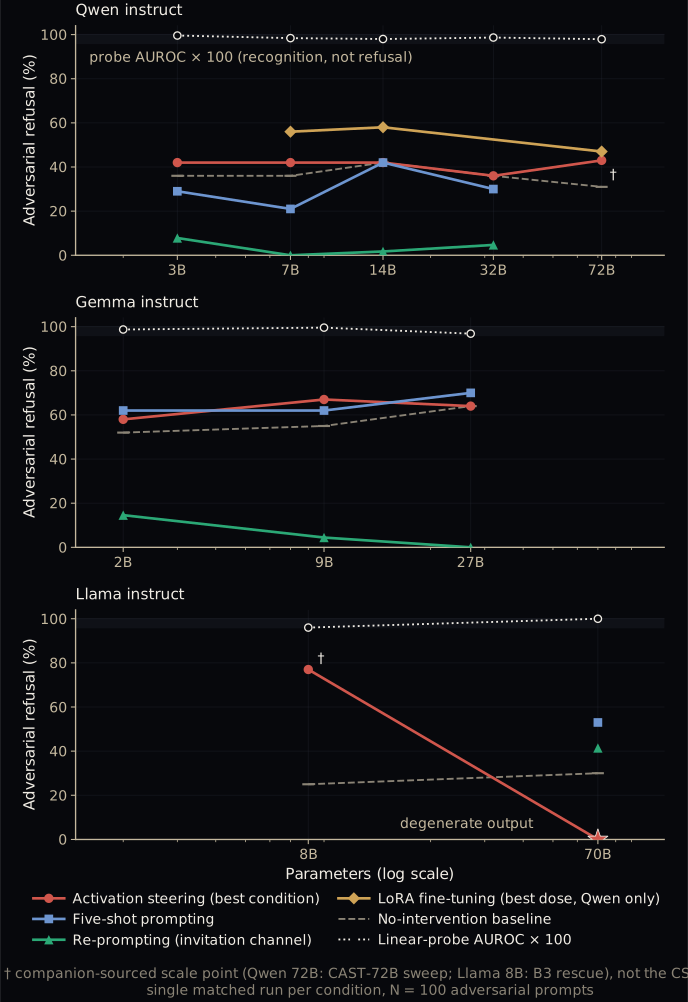
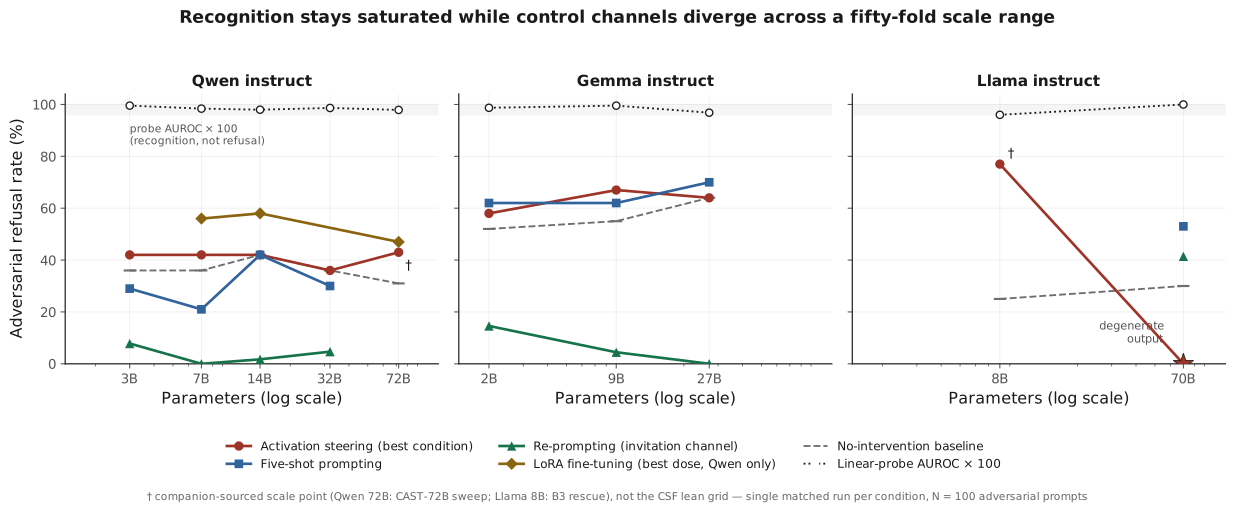
Three architecture families, one panel each, on a log-parameter axis from 2 to 72 billion. The shaded band along the top of every panel is linear-probe AUROC times 100, above 96 at every scale: recognition is saturated everywhere, while activation steering (red) sits against a 42 to 43 percent ceiling on Qwen instruct, gains nothing at Gemma 27B and collapses to degenerate output at Llama 70B (starred); five-shot prompting (blue) overtakes steering at the largest scale, re-prompting (green) stays below 15 percent except on Llama 70B (41), and LoRA fine-tuning (gold, Qwen only) breaks the ceiling at 56, 58 and 47 percent, degrading with scale. Grey dashes mark each model’s no-intervention baseline; daggered points come from companion runs, one matched run per condition.